It’s been an eventful month! And in the next blog, (or series of blogs) I’ll go into some of it!
But, today, I wanted to write about something more immediate, and awesome.
So, I wanted to start with one of the cooler things to happen recently. Which is both an immediate positive for our National Parks, and an example of positive park participation that I link back to in future articles.
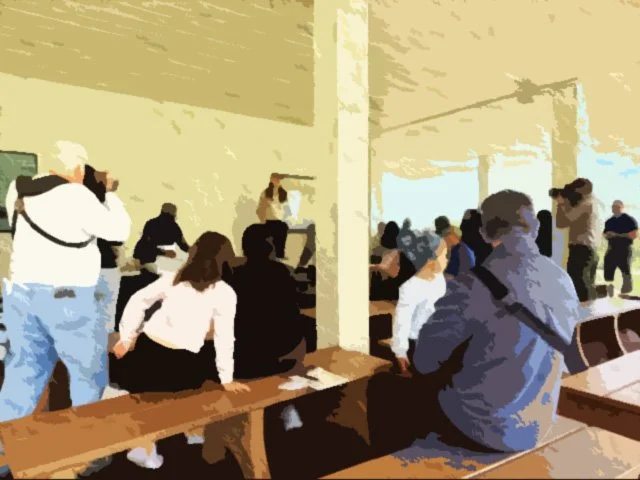
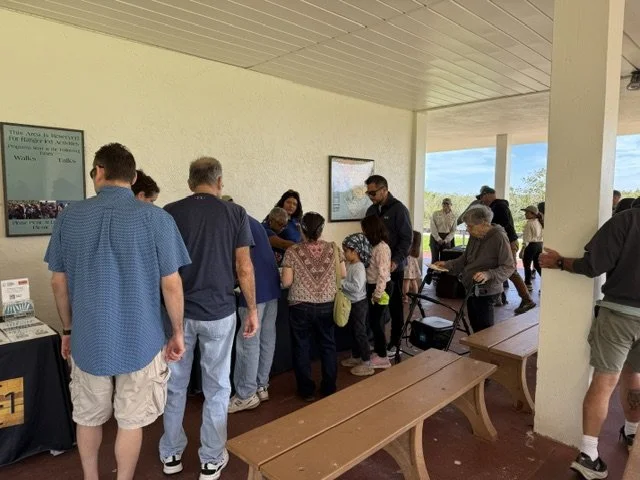
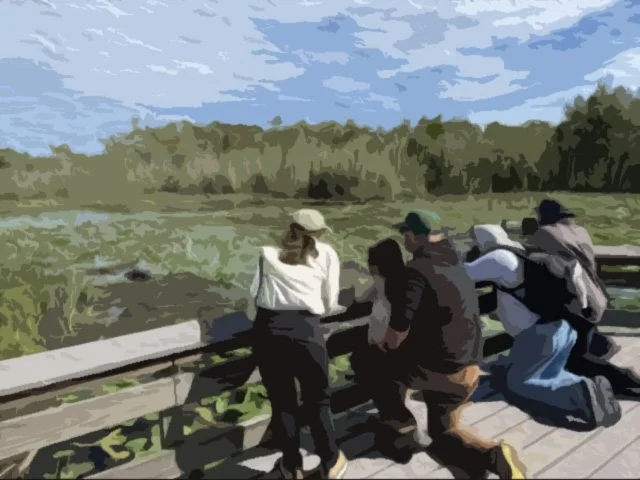
This weekend, I hopped up to the Royal Palm Visitor Center inside Everglades National Park to Celebrate the 75th Birthday of the Florida National Parks Association!
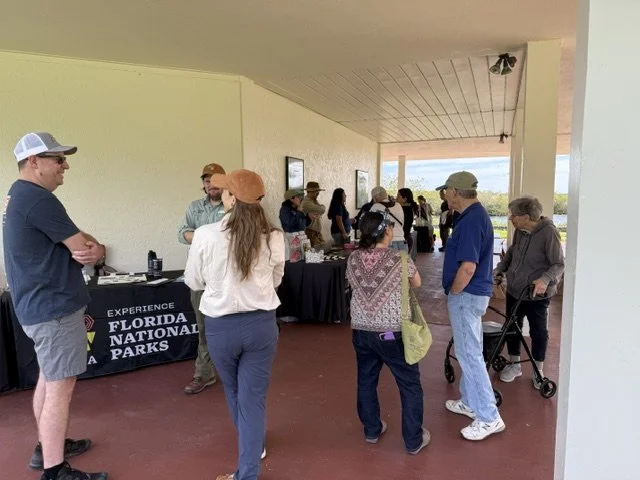
What is the FNPA? You ask, instead of clicking on the link above. (Which, fair, I should have just linked to their about page.)
But, here’s a summary. It’s a non-profit public partner organization that was established just 4 years after Everglades National Park. In 1951, a bunch of private citizens who liked and wanted to support the Everglades founded the the Everglades Natural History Association, to team up with and support the new park. In 1985, the Association expanded to partner with all 4 southern Florida National Parks: Everglades, Biscayne, Dry Tortugas (then Fort Jefferson National Monument,) and Big Cypress National Preserve.
What does it do?
Well, it works with and inside the parks above to gather information about them, educate the public on them, and support their long term preservation and care! In other words, they do some archive work and research, they operate some of the coolest tours you can take in each of the parks, and gift shops in the parks multiple visitor centers. (As a Non-profit, all proceeds go back into the parks FNPA supports.)
If you want to Kayak Biscayne Bay and see Jones Lagoon, that’s the Biscayne National Parks Institute, (which is part of the FNPA.) If you want a history tour of Big Cypress or a Swamp Walk in the Everglades, those are also some of the numerous tours offered by the Florida National Parks Association. If you want to buy the coolest t-shirt related to Dry Tortugas National Park (I am biased: check the quote on the back) or the most awesome Mystery Set in said park, you can (and should,) buy them through the Florida National Parks Association. (Because then you’re actually supporting the parks with your purchase.)
You should also, definitely, take the FNPA tours if and when you find yourself in the southern Florida parks. The FNPA Naturalists and Historians who guide the tours very obviously care for and know about the parks that they work in! (If you’re lucky, Friend of the Author: Gary Bremen - who wrote the forward for Treasure in Biscayne Bay sometimes gives the Heritage of Biscayne Cruise which leaves from the Dante Fascell Visitor Center in Biscayne National Park.) But all of their guides are awesome. Take the tours! They are another way to see, learn about, AND support the parks!
Ok. I know this reads like an ad, but it’s not. Instead, there’s a much larger and more important point to be made:
Saturday, I drove up to the Everglades to celebrate the 75th Birthday of the FNPA. An organization which was established and continues in it’s mission to support the Everglades, and now all 4 Southern Florida National Parks. The association has been, and is, interested in and committed to, the protection and preservation of our 4 parks, and to the sharing of these parks with the public to whom they belong. And it’s made up of people who care about the parks.
It’s incredibly successful at what it does. Because of the FNPA more people get to take tours in the Southern Florida Parks. More people get to buy cool park merch. More people get to learn about the parks, and more people get to work in the parks (giving those tours , selling that merch, and educating us all) and all of the proceeds go back into the park itself. Pretty cool.
And pretty cool that Associations like it can be so successful and long enduring as to last 75 years.
Partner organizations like FNPA are found in National Parks throughout the nation. Some of the larger ones manage programs, concessions, memberships, and more in multiple National Park units. Others, like the Everglades Natural History Association when it was founded, work in concert with the National Park Service to help promote and protect a single park, or even a single park bookstore.
Whatever the case, these associations are an example of an enduring truth. People care about our parks. People want to see them preserved, protected, promoted, and to share them with others. This is true of the Rangers who live in and work directly for the National Park Service as well. But Associations like the FNPA are ways for even more people to care for and participate in the care of parks that they love. (There are other ways as well, which I will go into later, including volunteering, ‘Friends of’ organizations and more.) And all of these play an incredibly important way for US to get involved with Our Parks.
Here’s the thing. Not everything happening to National Parks right now is great. And most of the news isn’t. News about the bad things happening in our parks gets a lot of coverage, because it’s sensational, it’s flashy, and it’s terrifyingly true.
Terrifying because destruction is easy, it’s devastating, and it can come swiftly. This sentiment was captured in a short story by Graham Greene in 1954 titled: The Destructors. In the story, (which is a pretty short and easy read.) A group of kids delight in the ease with which they can tear apart a remarkable old house which had withstood the Blitz in WW2. It’s a horror story and a tragedy written to emphasize the simple truth that things which can endure for centuries can be brought down in an instant. Which is why it’s so vital that people who care about our parks care about and fight for them now.
It’s harder to build. And building is only the start. Once something is established, it has to be maintained. This is more true for nature than it is for man-made construction. Old Growth Forests, Millenia-old ecosystems, complex food webs with an interconnected series of relationships all take centuries, if not thousands of years to develop. And when they are wiped out, it takes that much time to bring them back.
It is much better, much more important to prevent that destruction in the first place. And, of course, that means the immediate fight for these places. But it also means something more long term, more substantial: maintenance.
Of course, without humans, ecosystems reach a point of stability: Homeostasis. (A big word for same state.) But throw us into the mix, and we are very good at disrupting what is stable. A canal here, a new fashion trend there, and even an ecosystem so resilient that it has persisted for thousands of years can be thrown out of whack.
Take, the Everglades. In the late 1800s and early 1900s efforts were undertaken to drain all of southern Florida to make the land more easy to develop. At the same time, a resource the Everglades had in abundance: birds, became more valuable for their feathers, and were hunted to, or to the brink of extinction. These two man made problems lead to the near devastation of the entire Southern Florida ecosystem.
But then people came together to fight for the Everglades (the Greater Everglades including Big Cypress, and most of the land between Okeechobee and Florida Bay.) And they preserved a little piece of land, and then a little more. And then a little more.
I’ve talked about that fight for the Everglades before, because our Parks are Worth Fighting For. But that fight’s flashy too. It’s also easier to talk about. But what comes after that fight is much harder, much longer, and much more persistent. It’s the maintenance, the upkeep, the protection, the preservation, and the continued education. We need to learn more about these places, about how they change, and how we are changing them. We need to share what we know about these places with others and get them to care too.
The Craziest thing about our National Parks is that if they are working correctly this long middle stage, the maintanence, never stops. Nor, really does the fight. Because there will always be people who eye these places not for what they are, but for what can be extracted from them. There will always be people who take them for granted. There will be times where the common wisdom on how to protect these places will change with our understanding. And there will sometimes be destructors who eye these places as something to destroy, for profit, for entertainment, or just because they can.
And I’ll be back to writing about some of the many challenges Our Parks are facing in upcoming blogs. (with independent calls to action.) But if all of that ever seems overwhelming, I’ll leave this blog here. Because good things are happening in parks all the time too. They aren’t always as flashy as the bad, or as immediate as the current fight to protect the places we love. Sometimes the good things are more simple than that;
maintenance.
And the National Park Service does a lot of it. But the Associations that work alongside the National Parks do a lot of that maintenance too. And they also provide us an opportunity to help the places we love, even when things look bad, or the headlines seem worse. And we should celebrate and acknowledge them too. And, if you want, support them as well.
If you are looking for something to do,
If you have a favorite park, or a park you are worried about and you want to support, then look to the various partner Associations across the nation. They are a great way to start. Almost all of them have ways to help contribute to the maintenance of the places we love. The Florida National Parks Association, for instance, has a membership program, which allows for you to directly support the 4 southern Florida Parks. (and get discounts in their bookstores and online shop, along with a newsletter which will keep you updated on events in the 4 parks.) They also have a license plate that you can get to support the Everglades.
And, again, they have tours, giftshops, and free programs too! All of these in effort to not just save the parks, but to promote them, preserve them, and maintain them for future generations.
It’s been 75 years! Here’s to 75 more!
pps,
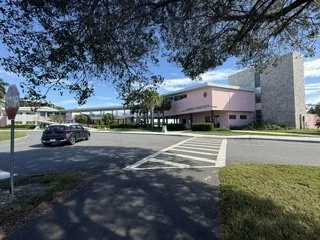
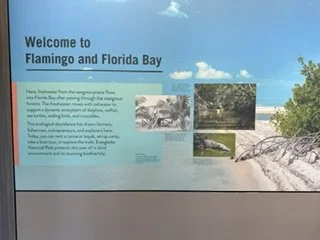
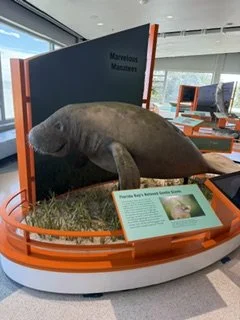
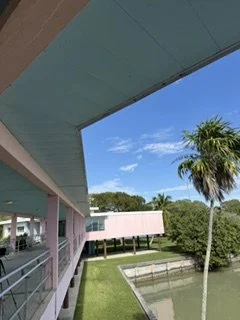
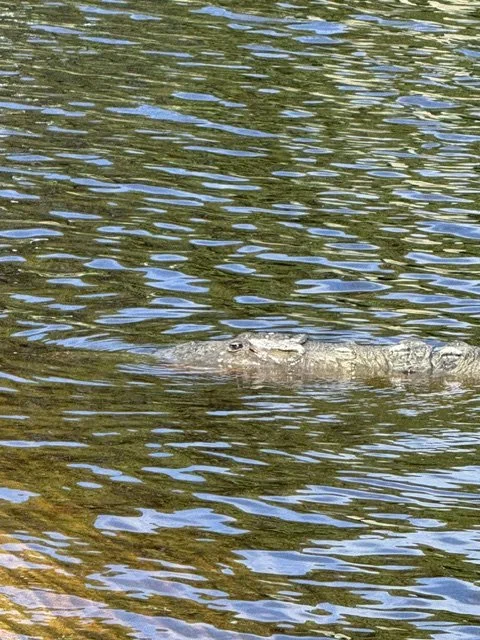
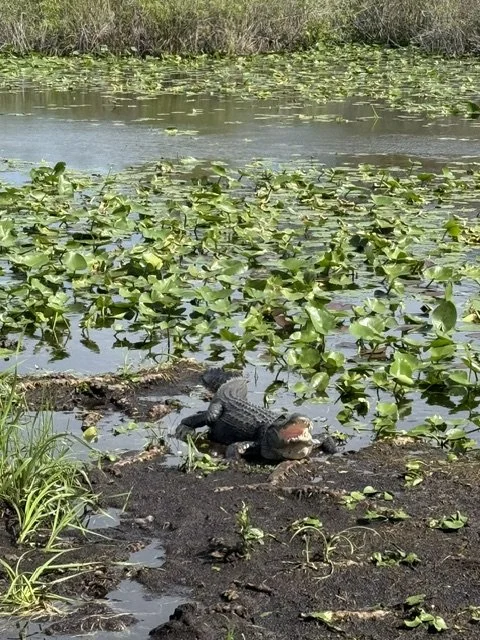
I also took the time to stop by the Flamingo Region of the Everglades, which (along with Royal Palm) features heavily in my upcoming book Treasure in the Swamp. More about that soon, but for now, here are a few picture previews.