
110 Park Facts to impress your teachers: 11 - 20
(And one extra)
In continuation of the 110th anniversary of the National Park Service, Let’s delve a little deeper into some facts about some of out nation’s coolest places. Hopefully we can learn something, and it’s all accurately sourced. If you want to know more about the rules I’m using for all of these facts check the first article here. But in short, I’m trying to find facts that impress and inspire curiosity. And if you notice a bias towards certain parks, that’s because I’m trying to dive a bit deeper than surface knowledge.
Because of that, I’m sticking to the parks I know best; the ones that I’ve written about, or the ones that I’ve visited.*
*(this also helps because that way I can use my own photos)
So, without further ado,
Here are facts 11 - 20, (Sources below)
#11: The explosion of the U.S.S. Maine in Havana Harbor lead to the outbreak of the Spanish American War in 1898. Which is usually covered in history class. However, it’s usually not mentioned that the last stop of the fated Steamship before Havana Harbor, was anchorage in the Dry Tortugas, where some sailors left their last marks signed on it’s walls.
#12: Gator Hooks, Trails, and Bars
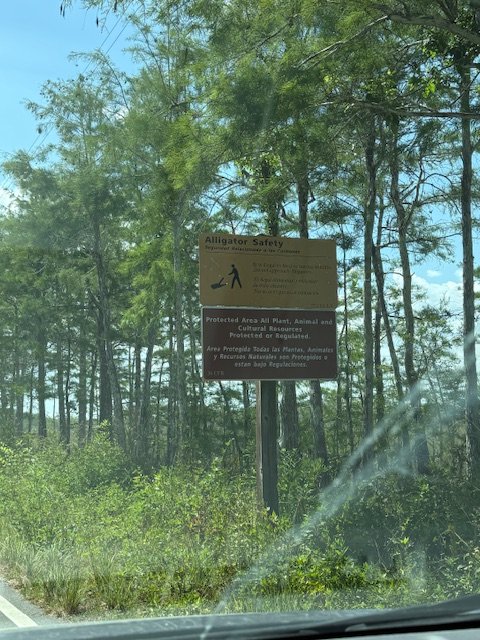
Sitting in wilds, on the edge of the swamplands in Big Cypress National Preserve is Gator Hook Trail. Today, it’s a tranquil, sometimes soggy, walk through the woods, but the name comes from a rough and tumble bar which once stood in the middle southern Florida’s nowhere lands.
#13: Elephant on an Island:
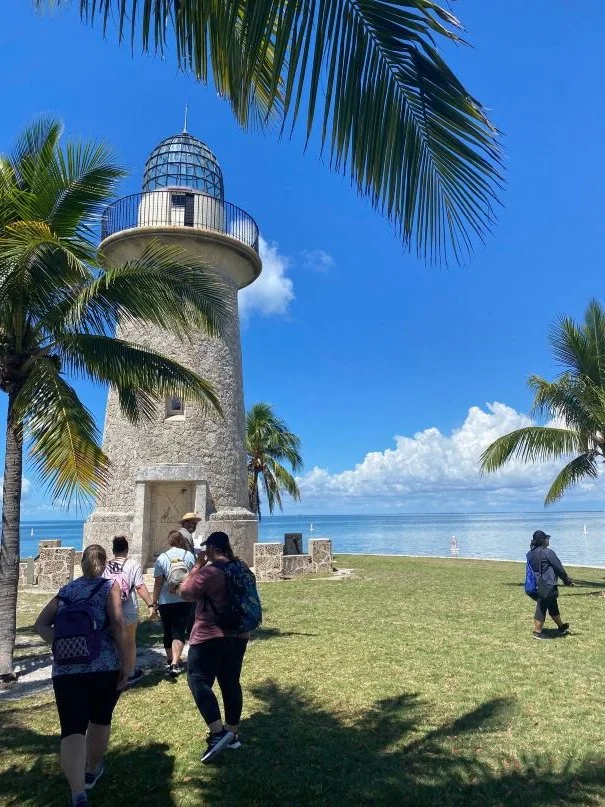
Perhaps the most interesting visitor to Biscayne National Park, (before it became a national park,) was Rosie the Elephant, who in the 1930s was brought by boat to Boca Chita by Carl G. Fisher to party with the rest of the big whigs.
#14: Mammoth’s on islands.
Channel Island’s National Park was once home to the now extinct Pygmy Mammoths, which, while trapped on the islands evolved from the much larger Columbian Mammoth into a species which 6.5 feet tall at the shoulders. (Less than half the height of their ancestors.) A nearly complete specimen was excavated in 1994.
#15: Deep Lake Life
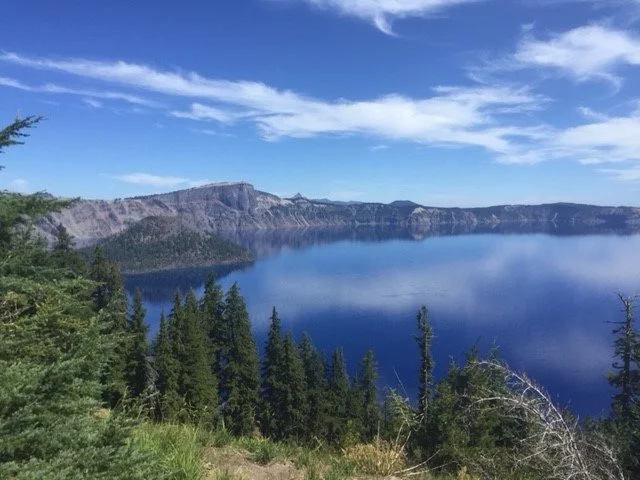
What lies at the bottom of the 1,900ft deep Crater Lake, in Crater Lake National Park? When Scientists sent down a submersible, they found massive algal mats. Colonies of algae living in the dark and feeding on chemical energy, which are tens of meters across, are scattered around the lakebed.
#16: Shallow River Life
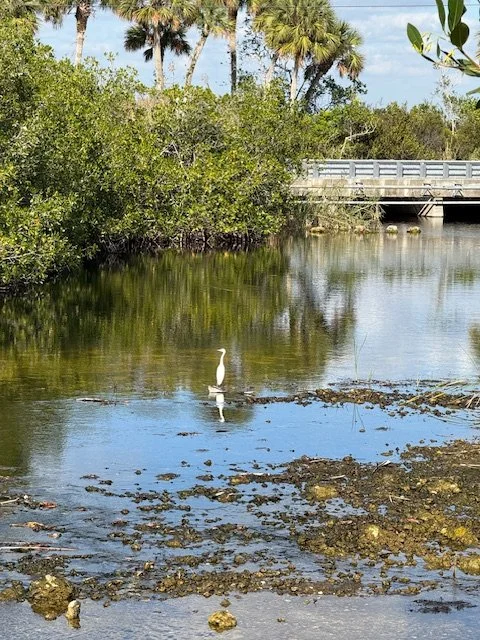
While the Everglades is a glade (grassland) that goes on forever, it’s also a marsh. And, more surprisingly, it’s a very wide, very slow river. Water spilling out of Lake Okeechobee will spread out over 60 miles wide, and flow downhill into Florida Bay and the Gulf of Mexico.
#17: Slow River Life
The River known as the Everglades flows very slowly, and it can take more than a year for a drop of water from Lake Okeechobee to Florida Bay. (Although the speed of flow is really dependent upon rain, and density of vegetation.)
#18: Desert Waters
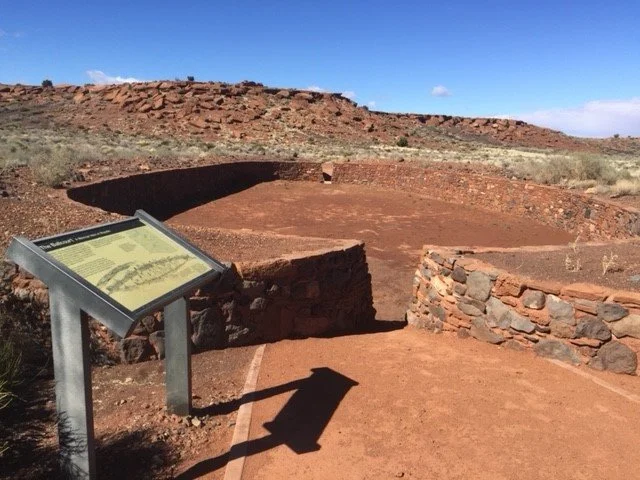
In Wupatki National Monument north of Flagstaff, Arizona, the monsoon season brings more than just rain to the desert. When water falls in the park, ancient appearing monsters crawl out of the sand. Triops, shield shrimp named for their three eyes (two normal, and an extra light-sensor) can wait in their eggs for decades until there’s enough rain to turn their sandy bunkers into an oasis.
#19: Swamp Invasion!
Many are now familiar with the Burmese Pythons who have been crowding out, and eating, native wildlife in the Everglades for decades. Fewer, however, know of another invasive predator in the waters of Southern Florida! Lurking just behind the grass, with 70% of the Everglades’ Amphibian population in it’s mouth is the Asian Swamp Eel! (Just when you never thought it was safe to get in the water to begin with!) -←- this is a very stretched JAWS reference.
#20: Cave Creatures!
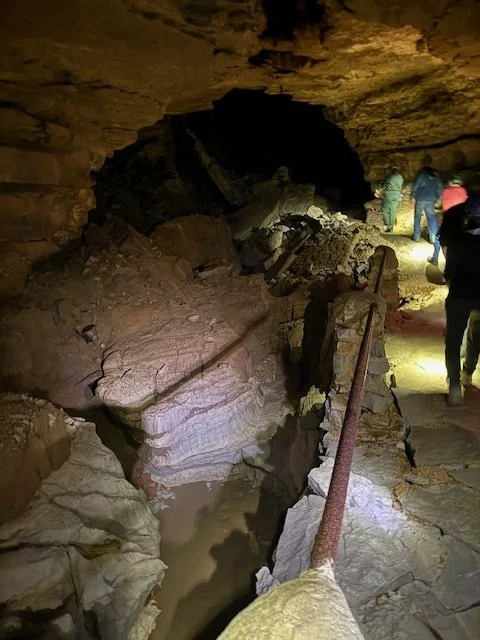
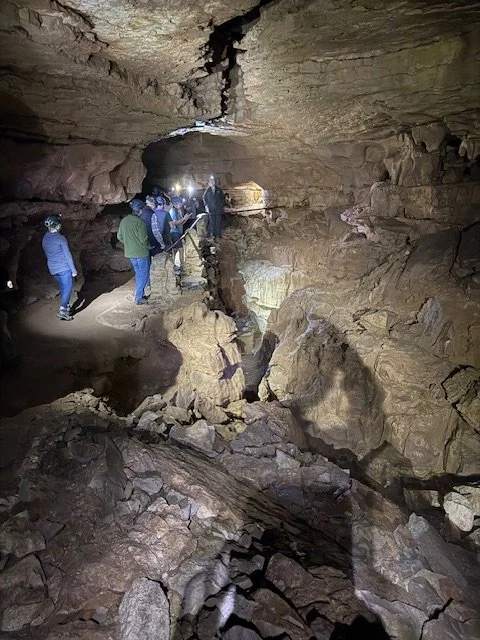
A Troglobite is a creature that only lives in a cave. A Troglophile is a creature that just spends most of it’s time in the cave, but may come out sometimes. For Instance, if you see a white, nearly translucent crayfish scavenging the waters of Echo River Springs, it’s not a crayfish ghost. That’s just the Mammoth Cave Crayfish, which mostly live inside the cave, but do come out to scavenge. The two species of eyeless fish, however, spend all of their time inside the cave.
And, as always,
an added fact:
A Tril-ling encounter
In the book telling her story of living on Elliot Key in Biscayne National Park. Charlotte Neidhauk describes one encounter with a strange creature that washed up next to the docks. Intending to get it identified, they scooped it up, kept in in a bucket and took it to Miami. Unfortunately, it disintegrated along the way! Their description to a local scientist made him think they might have encountered a creature 200 million years out of time A Trilobite! Which would be odd, because they went extinct before the dinosaurs.
What could this creature have been then? Could trilobites, (like ceolocanths,) have modern lineages which have survived far beyond their extinct ancestors? Maybe. I wasn’t there, and there aren’t any pictures. However, given the fact that it disintegrated in a bucket of salt water, I have a hard time believing that it had a hard calcium carbonate outer shell. (chitin wasn’t around yet, so they basically had limestone exoskeletons) Some other potential answers are a strange type of tunicate, maybe a chiton, a weird sea slug, or perhaps, (and is my best guess) some sort of strange echinoderm (perhaps something washed up from the depths, and unprepared for lower pressure, like enypniastes , or something less weird, but strange none-the-less.) Or Maybe it was a trilobite. The seas are weird, and we don’t know them all! How many of you knew that there was an algal mat in Crater Lake called “The Brain”?
That’s it for this week! Party On! And Be on the lookout for Treasure In the Swamp which will be available soon!
Sources:
#11:
https://www.history.navy.mil/research/histories/ship-histories/danfs/m/maine-i.html
#12
Meh, just look up gator hook bar. There was a country singer from the region.
#13
http://www.ournationalparks.us/south_florida/biscayne/biscayne_national_park_history_ahead_of_its_time/ (Unsecured website, you are welcome to look up Rosie the Elephant!
#14
https://www.nps.gov/chis/learn/historyculture/pygmymammoth.htm
#15
https://ir.library.oregonstate.edu/concern/parent/47429b725/file_sets/sf2686566
#16
https://en.wikipedia.org/wiki/Everglades
#17
https://www.floridamuseum.ufl.edu/southflorida/regions/everglades/
#18
https://www.nps.gov/wupa/learn/nature/springs.htm
#19
https://news.fiu.edu/2025/spread-of-invasive-swamp-eels-poses-new-risks-to-everglades
#20
https://www.nps.gov/maca/learn/nature/crustaceans-and-mollusks.htm
Extra fact:
https://floridanationalparksassociation.org/product/charlottes-story-a-florida-keys-diary-1934-1935/